3 Ultra-Rare U.S. Coins: Most people handle coins every day without giving them a second thought. They pass through hands at coffee shops, grocery stores, parking meters, and vending machines. Yet hidden among ordinary nickels, dimes, and pennies are a few coins so rare that they have sold for staggering amounts of money.
The idea that a life-changing discovery could be sitting in a pocket or coin jar is what keeps collectors searching. While the odds are slim, history has proven that remarkable coins have surfaced in everyday circulation before.

Here are three ultra-rare U.S. coins that have become legends in the collecting world and continue to inspire treasure hunters everywhere.
The 1913 Liberty Head Nickel
Few coins capture the imagination quite like the 1913 Liberty Head nickel. Officially, this design was replaced in 1913 by the Buffalo nickel. Yet somehow, five Liberty Head nickels bearing the date 1913 were struck.
No official records explain their creation, which only deepens the mystery. For decades, collectors have debated how and why these coins were produced. What is certain is that only five genuine examples are known to exist today.
Over the years, each of these nickels has developed its own history of private sales and public auctions. Whenever one appears on the market, it commands enormous attention. Prices have climbed into the millions of dollars, making it one of the most valuable coins ever produced in the United States.
While the chance of finding one in circulation today is incredibly small, the story of this nickel reminds collectors that unusual coins sometimes slip into the public before anyone realizes their importance.
The 1943 Copper Penny
During World War II, copper was needed for military equipment. In 1943, the U.S. Mint switched from bronze pennies to zinc-coated steel cents. These steel pennies have a distinct silver color and are common today.

However, a small number of bronze planchets from 1942 were accidentally left in the presses. When production began for the 1943 cents, a few copper pennies were struck by mistake.
The result was one of the most famous mint errors in American history. Unlike the steel cents produced in the millions, only a handful of genuine 1943 copper pennies are known.
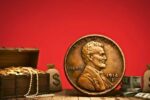
These rare coins have sold for hundreds of thousands, and in some cases over a million dollars, depending on condition and mint mark. Collectors continue to search for them because they resemble ordinary pennies at first glance.
The easiest way to check is by using a magnet. Steel cents stick to a magnet, while copper cents do not. If a 1943 penny does not respond to a magnet, it deserves closer inspection from an expert.

The 1975 No-S Roosevelt Dime
Proof coins are specially made for collectors and typically carry a mint mark indicating where they were produced. In 1975, proof dimes struck in San Francisco were expected to have an S mint mark.
Yet a tiny number of proof dimes left the mint without the S. These No-S proof dimes were packaged into proof sets and sold before the mistake was discovered.
Only two confirmed examples have surfaced publicly, making this one of the rarest modern U.S. coins. Because of its extreme scarcity, it has brought astonishing prices at auction.
Unlike older coins that might be worn from circulation, this rarity is a proof coin with mirror-like surfaces and sharp details. Its value comes from a simple but dramatic omission.

This example shows how even small errors in modern minting can lead to extraordinary rarity.
Why Ultra-Rare Coins Become So Valuable
The value of ultra-rare coins is driven by scarcity, historical significance, and collector demand. When only a few examples are known to exist, competition among buyers pushes prices higher.

Condition also plays a critical role. A coin with minimal wear and strong visual appeal will command more than one that is damaged or heavily circulated.
In some cases, mystery adds to the allure. The uncertain origins of certain coins create stories that captivate collectors and historians alike.

As time passes and coins are lost or damaged, surviving examples become even more desirable.
Could Rare Coins Still Be in Circulation
Although many ultra-rare coins have already been identified and secured in collections, surprising discoveries still happen. Estate sales, inherited collections, and forgotten coin jars have revealed valuable pieces in the past.
Modern coins with mint errors are especially likely to surface because they were distributed before collectors noticed the mistake.
The key is awareness. Most people overlook coins entirely. A collector, however, examines dates, mint marks, and unusual details carefully.
How to Check Your Change
Begin by separating older coins from newer ones. Pay attention to dates such as 1943 pennies or coins from transitional years when design changes occurred.
Use basic tools like a magnifying glass and a small magnet. Look for differences in color, unusual spacing, missing mint marks, or striking errors.
If you believe you have found something unusual, avoid cleaning the coin. Cleaning can reduce value significantly. Instead, consult a reputable coin dealer or submit the coin to a professional grading service for authentication.
Even if you do not uncover a million-dollar rarity, the process of searching can be rewarding in itself.
The Enduring Appeal of Coin Hunting
Stories of ultra-rare coins worth fortunes continue to spark curiosity. They remind us that history is not locked away in museums. Sometimes, it circulates quietly in everyday life.
The 1913 Liberty Head nickel, the 1943 copper penny, and the 1975 No-S Roosevelt dime stand as proof that small pieces of metal can carry enormous value.
While the chances of finding one are slim, they are not impossible. And that possibility is enough to make many people pause before spending their change.
The next time you receive coins in a transaction, take a closer look. Hidden among the ordinary might be something extraordinary.